 AuctionGate.io







What is a "Salvage title" and how does it affect the value of a car at Copart or IAAI auction?
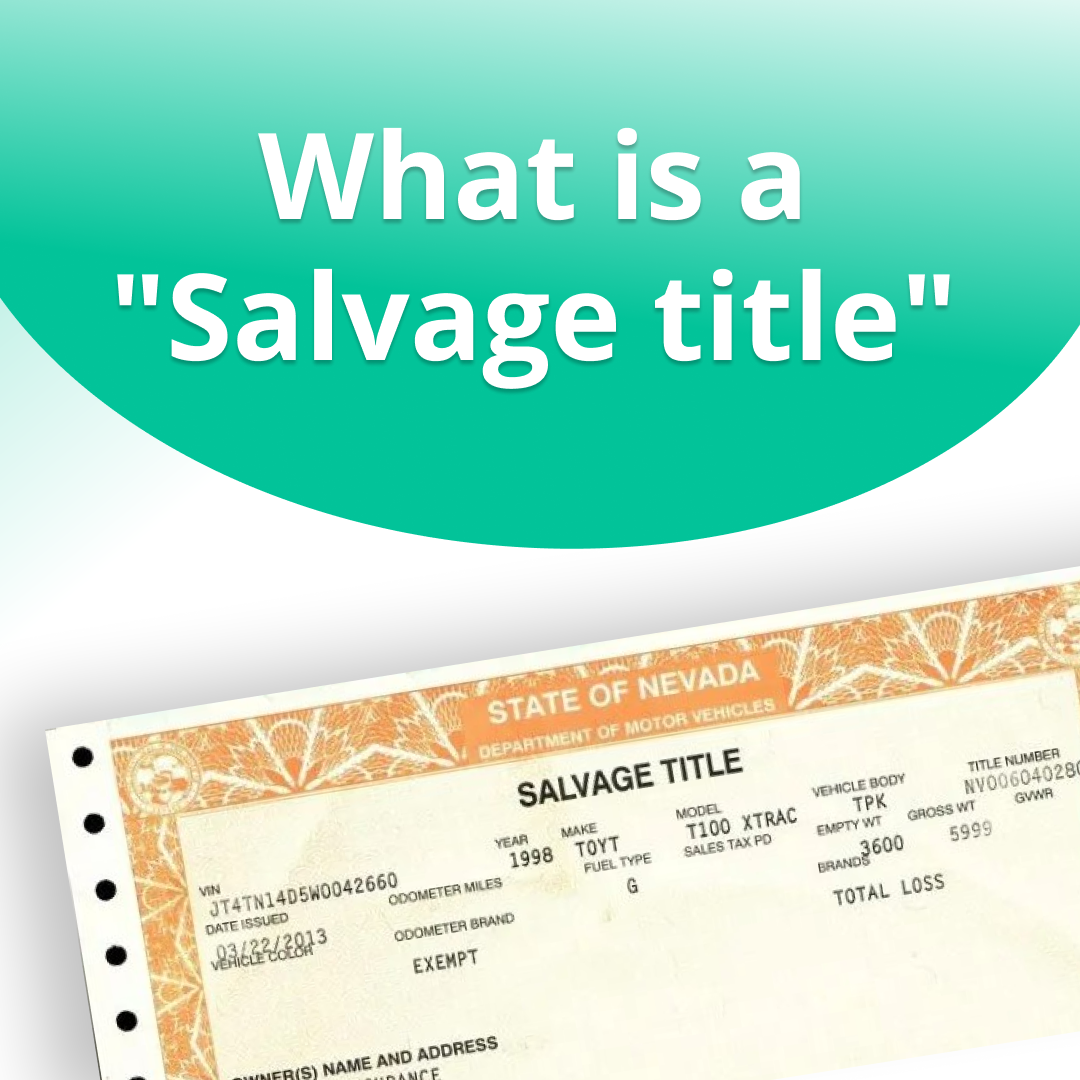
Understanding salvage title meaning is one of the most important skills any auction buyer can develop. Whether you're evaluating a copart salvage title lot for the first time or scaling a professional salvage-to-rebuilt operation, this guide covers everything that matters: how salvage designations are assigned, how salvage title affects car value, what insurance and registration barriers exist, and how to use platforms like AuctionGate to make disciplined, data-driven purchasing decisions across both Copart and IAAI.
What Is a Salvage Title?
Salvage title meaning in practical terms: it is an official state-issued status assigned to a vehicle when an insurance company declares it a total loss. This occurs when the cost of repairing a damaged vehicle exceeds a defined percentage — typically 70–90%, varying by state — of the vehicle's actual cash value (ACV) prior to the damage event. Once declared a total loss, the insurer pays out the policyholder's claim, takes legal ownership of the vehicle, and the state DMV rebrands the title as "salvage." This brand is permanent — it stays attached to the VIN regardless of any future repairs. For buyers at Copart, IAAI, or any other auction platform, the salvage brand is the single most consequential classification in the entire vehicle record.
- Definition: A salvage title indicates an insurance-declared total loss due to repair costs exceeding the state-defined threshold.
- Trigger events: Collision damage, flood exposure, fire, theft recovery, or vandalism — any event that leads to a total loss declaration.
- Threshold: Typically 70–90% of pre-damage ACV, depending on the issuing state.
- Ownership transfer: Insurer pays the policyholder, acquires the vehicle, and consigns it to auction — which is the origin of most copart salvage title and iaai salvage title inventory.
- Permanence: The salvage brand cannot be removed — it remains on the VIN record permanently, even after full restoration.
The salvage title meaning extends beyond the immediate physical condition of a vehicle. A car may be fully drivable and structurally sound yet still carry a salvage title if the insurer's repair estimate crossed the threshold — a situation common with newer vehicles where OEM parts costs are high. Conversely, a catastrophically damaged car will also carry the same brand. This variability is precisely why pre-bid inspection and thorough history review are non-negotiable for any serious auction buyer, and why platforms that contextualize title status alongside damage category, condition photos, and loss description provide genuine decisional value.
How a Car Gets a Salvage Title
The pathway from damage event to copart salvage title listing is a defined process that typically takes two to six weeks from incident to auction. It begins when a vehicle owner files an insurance claim following a qualifying event. The insurer dispatches an adjuster to assess the damage and estimate the repair cost. If that estimate exceeds the state's total loss threshold as a percentage of the vehicle's pre-damage ACV, the insurer declares a total loss, issues a settlement payment to the policyholder, and files a title transfer with the state DMV. The DMV rebrands the title, and the vehicle enters the insurer's disposal pipeline — which, for most major carriers, means consignment to Copart or IAAI. This is why iaai salvage title inventory skews heavily toward insurance-company consignments with detailed loss documentation.
- Step 1 — Claim filed: Policyholder reports the incident; insurer assigns an adjuster.
- Step 2 — Damage assessment: Adjuster estimates repair cost and compares it to the vehicle's ACV.
- Step 3 — Total loss declaration: If repair cost exceeds the state threshold, the insurer declares a total loss.
- Step 4 — Title transfer: Insurer pays settlement, takes title, files with DMV; the title is rebranded "salvage".
- Step 5 — Auction consignment: Vehicle is consigned to Copart, IAAI, or another wholesale channel for disposal.
It's important to note that not all salvage vehicles were severely damaged in dramatic collisions. A significant share of copart salvage title and iaai salvage title inventory consists of vehicles declared total loss because flood exposure made repair risk unacceptable, or because the vehicle was stolen and recovered after the insurer had already paid out. In each case, the damage profile, severity, and repairability differ substantially. A flood car and a front-impact collision car may both carry identical salvage branding on paper — which is why the damage category and condition report attached to each lot are far more informative than the title status alone.
How a Salvage Title Affects Car Value
Understanding how salvage title affects car value is essential for accurate bidding. As a general benchmark, salvage-titled vehicles sell for 40–60% below their clean-title equivalent market value — but this figure varies substantially based on damage type, repair potential, make and model, and the specific platform dynamics of the salvage car auction price on a given day. Salvage car value copart reflects live competitive bidding, meaning a desirable model with light damage can close well above the statistical average while a vehicle with complex structural damage may sell for a fraction of its stated ACV. Buyers who calibrate their bids against historical comparable sales — not just the current listing — consistently make better decisions.
- Average discount: 40–60% below clean-title ACV for the same make, model, year, and mileage.
- Damage type impact: Flood and fire damage suppress salvage car value copart more than repairable structural collision damage.
- Rare and collectible models: High-demand vehicles retain more relative value even with salvage branding.
- Rebuilt title uplift: Successful conversion to rebuilt title partially recovers value but does not fully close the gap to clean title.
- Salvage title resale value ceiling: Even fully restored rebuilt-title vehicles face permanent discounts in the private and dealer markets.
The salvage title resale value challenge is one of the most consequential factors for buyers planning to repair and resell. Even after professional restoration and rebuilt title conversion, the vehicle's documented salvage history remains permanently visible in all VIN history reports. Private buyers apply a residual discount reflecting uncertainty about repair quality — and most dealers apply an even steeper one. Buyers who understand this ceiling and factor it into their maximum bid calculation — working backward from the realistic rebuilt resale value minus repair costs and a margin — are the buyers who consistently make profitable decisions at salvage car auction price.
Salvage Title at Copart vs IAAI
Both Copart and IAAI are the dominant US platforms for salvage car auction price discovery, but they operate with meaningful differences. Copart salvage title inventory is the largest in the country by volume, with 200+ US locations, a broad mix of damage types, and a platform that allows both dealer and public (with fee) access in most states. IAAI salvage title inventory, while somewhat smaller at 170+ locations, is particularly noted for detailed loss descriptions, insurance-company-grade condition documentation, and a buyer base that skews toward professional restorers and exporters. Understanding the operational differences helps buyers decide where to focus their sourcing efforts for specific vehicle types.
- Copart scale: 200+ US locations; broadest total inventory; strong on variety and volume.
- IAAI documentation: Typically more detailed condition reports and loss descriptions per lot.
- Access model: Both platforms require registration; some states restrict direct public bidding — broker or dealer access may be required.
- Fee structures: Both platforms charge buyer fees on top of the winning bid; fees vary by vehicle price tier and can add 15–30% to the salvage car auction price.
- AuctionGate integration: Both Copart and IAAI inventory is viewable through AuctionGate in viewing mode, allowing cross-platform comparison before committing to a purchase.
The practical implication for serious buyers is that limiting sourcing to one platform is a strategic constraint. Lots that are unavailable or overpriced on Copart may be available at better salvage car auction price on IAAI, and vice versa. Cross-platform visibility — combined with pre-bid cost estimation tools that account for auction fees, transport, and repair estimates — is one of the clearest structural advantages a buyer can build into their operation. This is the core workflow that AuctionGate's multi-auction sourcing tools are designed to support.
Insurance and Registration Challenges
The salvage title insurance challenge is one of the most practically significant barriers any salvage buyer faces. A vehicle with an active salvage title cannot be registered for road use in most US states — full stop. Before the vehicle can be driven legally, it must be repaired to roadworthy condition, pass a state salvage inspection, and receive a rebuilt title. Even after that conversion, salvage title insurance options remain substantially restricted. Many major national insurers decline comprehensive and collision coverage for rebuilt-title vehicles, citing the residual uncertainty about repair quality. Those that do offer coverage often charge premiums 20–40% above comparable clean-title vehicles.
- No road use until rebuilt: Salvage-titled vehicles cannot be legally registered or driven on public roads in most states.
- Inspection required: Converting to rebuilt title requires a state salvage inspection and, in some states, a law enforcement parts inspection.
- Limited coverage: Most insurers offer only liability coverage for rebuilt-title vehicles; comprehensive and collision may be unavailable.
- Premium increase: Where full coverage is available, expect salvage title insurance premiums 20–40% above clean-title equivalents.
- State variation: Requirements for inspection, documentation, and registration differ significantly by state — always verify local rules before bidding.
Buyers who skip the insurance due diligence step before bidding frequently discover post-purchase that their vehicle is uninsurable at any practical cost, or that the rebuilt title conversion process in their state involves administrative complexity they hadn't anticipated. Confirming the availability and cost of salvage title insurance for the specific vehicle type and your specific state is not optional pre-bid research — it is a foundational input into the true total cost of ownership calculation. Explore the AuctionGate buyer resources library for state-by-state rebuilt title and insurance guidance.
When Buying Salvage Makes Sense
Despite the genuine challenges, the decision to buy salvage car Copart and IAAI inventory is strategically sound for a well-defined set of buyers and use cases. The core economic logic is straightforward: the discount between salvage car value Copart acquisition price and the post-repair rebuilt-title resale value — or the parts value, or the export value in markets with different title recognition standards — is where profit lives. Buyers who can accurately estimate repair costs, navigate the rebuilt title conversion process, and maintain reliable insurance relationships consistently outperform market averages in their sourcing operations.
- Parts sourcing: Salvage vehicles are a cost-effective source of OEM components for same-model repairs.
- Export markets: Many international markets apply different standards to salvage titles; the resale discount is often smaller abroad.
- Restoration and tuning projects: Low acquisition cost offsets high restoration investment for rare or desirable models.
- Dealer resale pipeline: Buy salvage → repair → converted rebuilt title → retail resale with documented history is a proven business model.
- Fleet and operational use: Rebuilt-title vehicles can serve in operational or fleet contexts at significantly lower capital cost.
The salvage vs rebuilt title spread is the key metric for dealer and restorer buyers: the difference between what a vehicle costs as salvage and what it sells for as a documented rebuilt-title car — net of repair and conversion costs — defines the margin. Buyers who model this spread accurately before bidding, rather than reacting to salvage car auction price in real time, make consistently better decisions. The discipline of pre-bid financial modeling is what separates profitable salvage operations from costly ones.
How to Convert a Salvage Title to Rebuilt
The salvage vs rebuilt title conversion is a defined legal pathway available in every US state, though specific requirements vary significantly by jurisdiction. The process transforms a vehicle from legally unregisterable to road-legal, insurable, and meaningfully more valuable — directly recovering a portion of the salvage title resale value discount. For buyers who buy salvage car Copart or IAAI with the intention of reselling, this conversion is the core value-creation step and must be understood thoroughly before bidding on any lot.
- Step 1 — Complete repairs: Restore the vehicle to roadworthy condition using documented parts (receipts required in most states).
- Step 2 — DMV application: Submit a rebuilt title application with supporting repair documentation, photos, and parts receipts.
- Step 3 — Salvage inspection: Pass the state-mandated salvage inspection; some states also require a law enforcement parts inspection to confirm no stolen parts were used.
- Step 4 — Rebuilt title issuance: Upon passing inspection, the DMV issues a rebuilt title — the vehicle can now be registered and legally driven.
- Step 5 — Permanent disclosure: The rebuilt history remains visible in all VIN history reports. This transparency actually benefits future buyers by providing a documented repair trail.
Successfully completing the salvage-to-rebuilt conversion substantially improves the vehicle's market position. A rebuilt-title car is insurable, registerable, and generates meaningfully higher salvage title resale value than an unrepaired salvage vehicle. The permanent documentation of the conversion — parts receipts, inspection records, and the rebuilt title itself — provides a paper trail that sophisticated buyers at the rebuilt stage actually value as evidence of transparent history. For operators running salvage-to-rebuilt pipelines at scale, standardizing this documentation process is a competitive advantage that directly supports higher and faster resale outcomes.
How AuctionGate Helps Salvage Buyers
Effectively sourcing copart salvage title and iaai salvage title inventory requires more than a bidder registration on each platform. Professional buyers need cross-platform lot aggregation, pre-bid cost estimation incorporating auction fees and transport, access to historical salvage car auction price data for comparable lots, and a pipeline management layer to track active bids, won lots, and shipment status. AuctionGate provides exactly this infrastructure in a single purpose-built interface, accessible to buyers at any scale — from individual importers to high-volume dealer operations.
- Unified inventory view: Browse Copart and IAAI salvage lots side by side in one interface.
- Pre-bid cost calculator: Estimate the true total cost per lot — winning bid + auction fees + transport — before committing.
- Historical price data: Calibrate bids against actual salvage car auction price trends for comparable lots.
- VIN and title history: Access damage descriptions, loss categories, and VIN records to assess salvage car value Copart accurately.
- Pipeline management: Track bids, won lots, and shipment status across both platforms simultaneously.
AuctionGate is available today in viewing mode — meaning buyers can analyze copart salvage title and iaai salvage title inventory, compare lots, and build sourcing strategies without any financial commitment. This is particularly valuable for buyers entering the salvage market for the first time, or for established operations looking to evaluate the platform before integrating it into their full workflow. The viewing mode provides real market data — actual lot conditions, actual salvage car value Copart pricing, actual fee structures — that no amount of research elsewhere can fully replicate.
Conclusion
Salvage title meaning encompasses far more than the physical condition of a single vehicle — it is a legal, financial, and logistical framework that shapes every decision from initial bid to final resale. Buyers who understand how salvage title affects car value, navigate salvage title insurance requirements proactively, and use disciplined pre-bid cost modeling across copart salvage title and iaai salvage title inventory consistently make better decisions and generate better returns. The salvage vs rebuilt title conversion pathway provides a clear route to value recovery — and platforms like AuctionGate provide the data infrastructure to source, evaluate, and execute on salvage opportunities with the clarity and confidence that profitable operations require.
Ready to start sourcing salvage vehicles with full market visibility? Create your free AuctionGate account and get immediate access to Copart and IAAI salvage inventory, pre-bid cost calculators, and historical price data — no commitment required.
FAQ:
Q1: What Does Salvage Title Mean in Practical Terms?
A: Salvage title meaning in practice is this: the vehicle carries a permanent legal notation indicating that an insurance company declared it a total loss at some point in its history. This notation cannot be removed, expunged, or masked — it is attached to the VIN and will appear in any title search or VIN history report, forever. In practical terms, it means the vehicle cannot be legally registered or driven on public roads until it has been repaired and converted to a rebuilt title through a state-mandated inspection process. It means most major insurers will not offer comprehensive or collision coverage, and those that do will charge elevated premiums. It means private buyers and dealers apply a permanent discount to the vehicle's market value reflecting the documented damage history and the residual uncertainty about repair quality. And it means that financing the vehicle through a conventional lender is difficult, since most lenders treat salvage-branded vehicles as unsuitable collateral. Understanding the full scope of these practical implications — not just the definition — is what separates informed salvage buyers from those who discover the consequences after the purchase.
Q2: How Does a Salvage Title Affect Car Insurance?
A: Salvage title insurance is one of the most consequential practical challenges for any salvage buyer. An active salvage title makes the vehicle uninsurable for road use — full stop — because the vehicle is not legally registerable until it has been converted to a rebuilt title. After conversion, insurance options remain substantially more restricted than for clean-title vehicles. Many major national carriers — including some of the largest — decline to offer comprehensive or collision coverage for rebuilt-title cars, citing the difficulty of verifying repair quality even when a state inspection was passed. Carriers that do offer full coverage typically charge premiums 20–40% above comparable clean-title vehicles. Some states have specific programs or carrier specializations for rebuilt-title coverage, but availability is not uniform. The practical implication for buyers is clear: before bidding on any salvage lot, confirm specifically what coverage is available for that vehicle type in your state, and at what premium. This is not ancillary research — it is a direct input into the true total cost of ownership and must be factored into the bid ceiling.
Q3: What Is the Difference Between a Salvage Title and a Rebuilt Title?
A: The salvage vs rebuilt title distinction is the most operationally important title differentiation in the auction buying context. A salvage title indicates a vehicle that has been declared a total loss and has not yet been repaired to roadworthy condition — it cannot be driven, registered, or insured for road use in most states. A rebuilt title indicates a vehicle that previously held a salvage title but has since been repaired, passed a state salvage inspection, and received official certification of roadworthiness. The rebuilt title vehicle can be registered, insured (with limitations), and legally driven. The critical point is that the rebuilt designation does not erase the salvage history — it is a permanent part of the VIN record. Both statuses carry resale value discounts relative to clean-title equivalents, but the rebuilt-title discount is substantially smaller because the vehicle is road-legal and the repair process has been officially validated. For buyers calculating the economics of a salvage purchase, understanding the salvage vs rebuilt title value spread — and accurately estimating the repair and conversion cost required to bridge it — is the foundational financial model of any successful salvage operation.
Q4: How Does a Salvage Title Affect Resale Value?
A: The salvage title resale value impact is permanent, measurable, and must be incorporated into every bid calculation. As a general benchmark, salvage-titled vehicles sell for 40–60% below their clean-title equivalents — though this range is wide because salvage car value Copart and IAAI both reflect live competitive demand rather than fixed pricing. A desirable model with light, repairable damage in a high-demand segment may close at only a 25–30% discount, while a severely flood-damaged vehicle of the same make and model may sell for 70% or more below ACV. After conversion to a rebuilt title through professional repair and state inspection, a portion of this discount is recovered — typically bringing the vehicle to 60–75% of its clean-title equivalent value. However, the salvage title resale value ceiling is permanent: even a flawlessly restored vehicle with a documented rebuilt title will trade at a discount to clean-title comparables in the private and dealer markets indefinitely. Private buyers apply this discount because VIN history reports are widely used and salvage history is prominently flagged. Dealers apply it because their own retail customers will see the history. For buyers building salvage-to-rebuilt operations, modeling the realistic rebuilt resale value ceiling — not optimistic best-case pricing — is the discipline that separates consistently profitable operations from those that break even or worse.