 AuctionGate.io







What Trim Is My Car By Vin
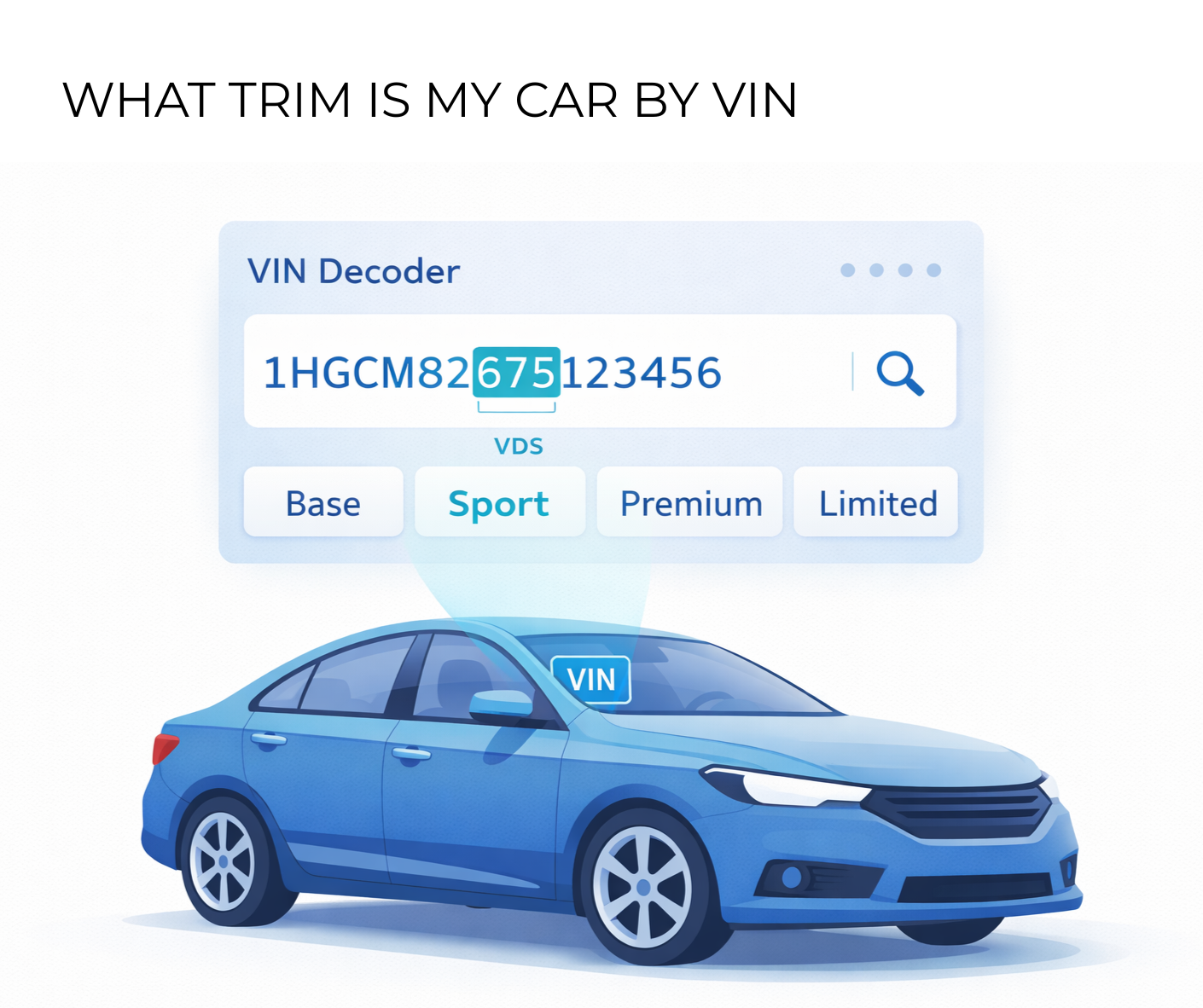

Your car’s trim level — the specific version or configuration of a model — can be identified directly through the VIN. Each VIN contains a section (usually characters 4 through 8) known as the Vehicle Descriptor Section (VDS). This part encodes details such as body type, engine, transmission, and trim. For example, within a Toyota VIN, one letter might indicate whether it’s an LE, SE, or XLE model, while another specifies engine type or drivetrain. By running a VIN lookup through a reliable decoder or the manufacturer’s official website, you can reveal your car’s exact trim level along with features like seat materials, wheel type, or tech package. This is especially helpful when buying or selling used vehicles, verifying auction listings, or ordering the right replacement parts.
What Is A Car Trim And Why It Matters For Buyers And Owners
When you’re scanning an auction catalog or browsing export listings, understanding the trim level – the package of features, engine, equipment and extras – gives you a huge edge. Simply put, the trim is the version of the vehicle, above the base model, that has certain options built in.
For buyers — especially at auctions or across borders — knowing the trim helps you gauge value, resale potential and risk. A higher trim might mean leather seats, upgraded engine or more advanced electronics; conversely a base trim may save you money but might lack desirable features.
For owners or importers, the trim matters for things like parts compatibility, insurance classification, tax/registration in different jurisdictions, and even warranty/recall relevance. Ignoring the trim can lead to unexpected costs.

Search Car Trim By VIN — Best Methods And Tools
If you’re wondering “how to identify my car’s trim using the VIN,” there are reliable tools and methods to help you find the answer. First, locate the VIN (Vehicle Identification Number), which is typically a 17-character code.
Once you have the VIN, plug it into a reputable VIN decoder or lookup service. For instance, the National Highway Traffic Safety Administration (NHTSA) offers a free VIN decoder that reveals key specs. Also services like Carfax provide trim-level info as part of their vehicle history reports.
Key things to check with the tool:
- Does the result explicitly state the trim level or package?
- Does it list standard equipment or options that correspond to known trim tiers?
- Is the information consistent with the vehicle details (engine, number of seats, drivetrain) you observe?
Keep in mind: not all VINs encode trim uniquely. Some manufacturers don’t include full trim detail in the VIN, so the decoder may only show model and engine but not full “LE vs XL vs Premium” version.
What Trim Level Is My Car By VIN — Key Details You Should Check
When you’ve run the query “how to find trim of car by vin” and got a report, here are the crucial details to validate:
- Trim designation: The report should ideally show something like “Sport”, “Limited”, “Premium X”, etc. If it just shows a model, you’ll need to dig further.
- Engine & transmission: Often the trim correlates with engine size or transmission type—strong clue if you’re comparing to published trim-specs.
- Standard equipment list: You might see “sunroof”, “leather seats”, “nav system” enumerated. These features help you match to a known trim.
- Build sheet or window sticker lookup: If available, the original build sheet (or window sticker) by VIN will show exactly what the car left the factory with. Some tools allow lookup by VIN.
Also be alert to caveats:
- As noted earlier, some OEMs omit trim detail in the VIN so the lookup may show multiple possible trims or just say “model series”.
- Features may have been added aftermarket, so physical inspection and documentation matter.
- Regions differ: European vs US vehicles may have different trim nomenclature, so if you’re buying globally, cross-reference the correct regional trim codes.

How To Check Trim Of Car By VIN Before Buying A Vehicle
For auction buyers—whether in America, Europe, Ukraine, Russia or Georgia—the query “how to check trim of car by vin” is critically practical. Here’s a short process to follow:
- Obtain the full VIN: Verify it matches documentation (title, auction sheet, export certificate).
- Run a VIN lookup: Use free decoders (NHTSA, manufacturer official tool) and paid history services (Carfax, etc) to get trim and spec details.
- Cross-check trim vs features: Look at photos from the auction: badges, interior (leather, seats count), wheels, badging can confirm the trim.
- Request the build sheet / original invoice: If possible, ask the seller or exporter for the original build sheet or window sticker by VIN. This gives factory-installed equipment list.
- Adjust valuation accordingly: If the trim is premium, expect higher value (and higher import/registration costs). If it’s base, ensure you’re not over-paying for features missing.
How to know the trim of my car by vin number? For voice-search compatibility, you might phrase: “Hey assistant — find my vehicle’s trim using VIN number 1ABCDEFGH…” and receive quick results via a decoder tool. Using queries like “find vehicle trim by VIN” or “find car trim by vin” will bring up the right methods.
Conclusion
Understanding your car’s trim level through its VIN isn’t just a minor detail—it’s an essential part of due diligence, especially when buying vehicles at auctions, importing internationally, or dealing across markets. By using VIN decoders, reviewing build sheets, and confirming specific features, you can minimize risks and make more informed purchasing decisions.
FAQ
Q1: Is VIN always accurate for trim information?
A: Not always. While the VIN often encodes manufacturing details, many manufacturers don’t embed full trim-level info or optional packages into the VIN. In such cases the decoder may show the model and engine but not the exact trim.
Q2: How do I find my car’s original build sheet?
A: You can request it from the manufacturer or dealer using the VIN, or use online services that provide factory window stickers / build sheets by VIN. Checking the owner’s manual, or dealer records can also help.
Q3: Can two cars have the same model but different trims?
A: Yes — very common. The model might be the same (e.g., “Sedan X”), but trims can differ (Base, Sport, Premium, Limited) in engines, features, and pricing. That’s why it’s important to ask “which trim does my car have according to the VIN” rather than simply “what model is it.”